Same question. Four AI assistants.
Four different shortlists.
We asked Claude, ChatGPT, Gemini, and Perplexity for the top 5 wedding venues in the Cotswolds. None agreed on who matters. Your buyer is having the same conversation about your business.
By Frank Graham · Read the full briefing
One question. Four AI assistants.
Four different shortlists.
We asked Claude, ChatGPT, Gemini, and Perplexity the same question a real customer would ask: “I’m getting married and I want a big party. Top 5 wedding venues in the Cotswolds.” No two engines returned the same shortlist.
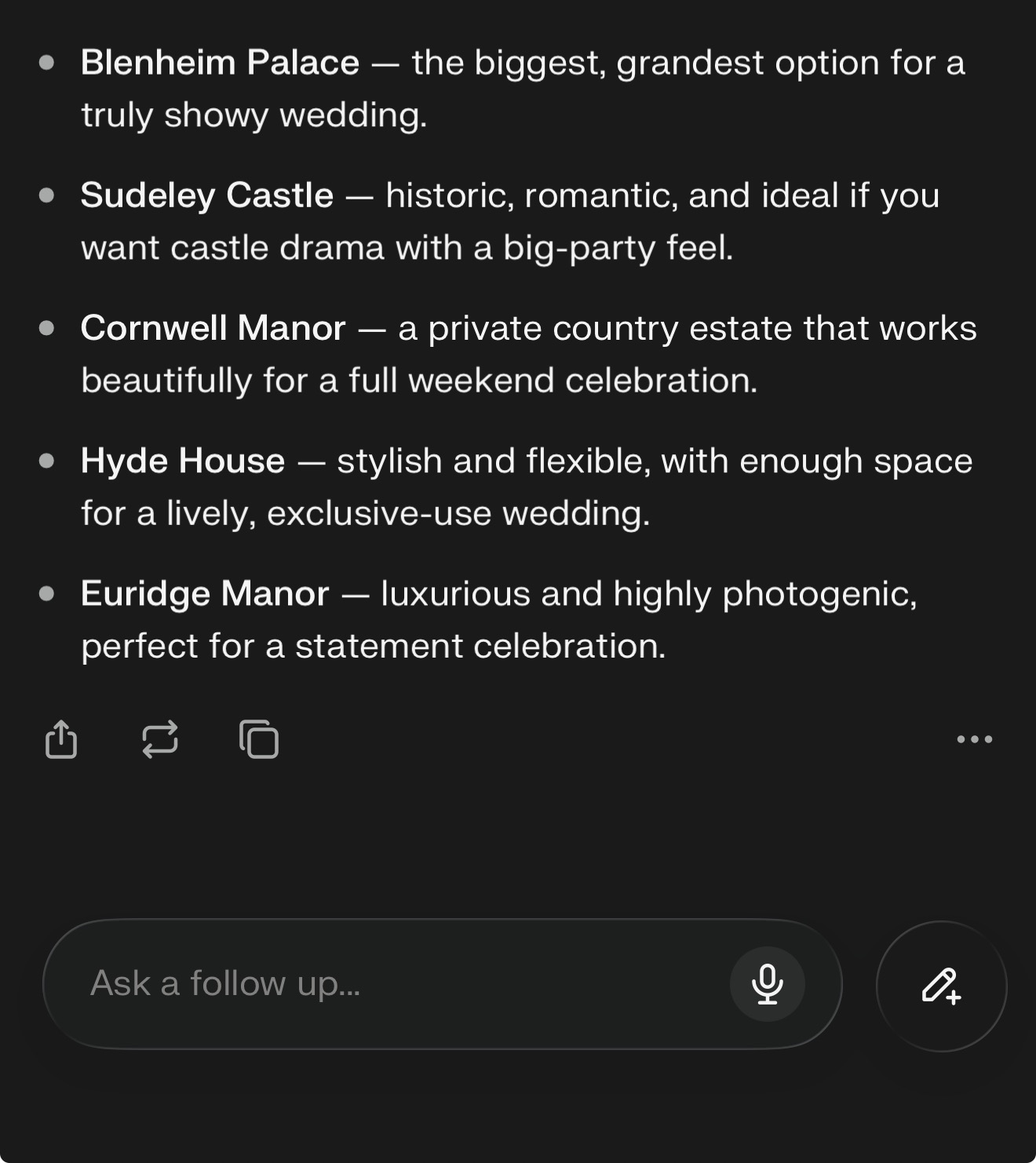
- Blenheim Palace
- Sudeley Castle
- Cornwell Manor
- Hyde House
- Euridge Manor
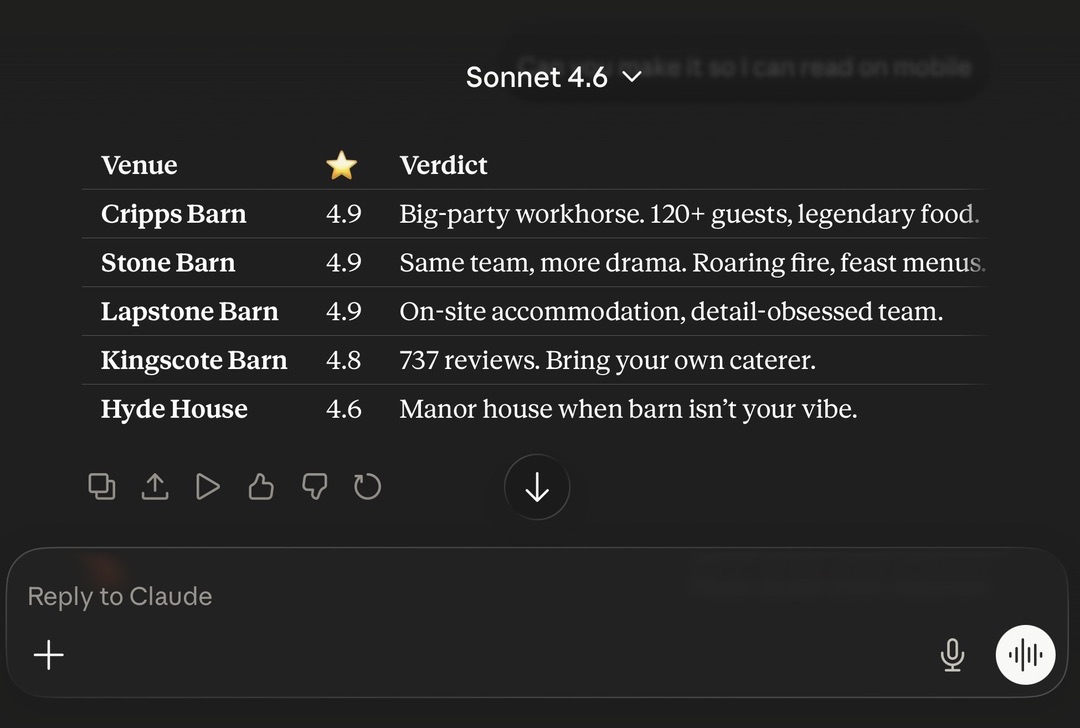
- Cripps Barn
- Stone Barn
- Lapstone Barn
- Kingscote Barn
- Hyde House
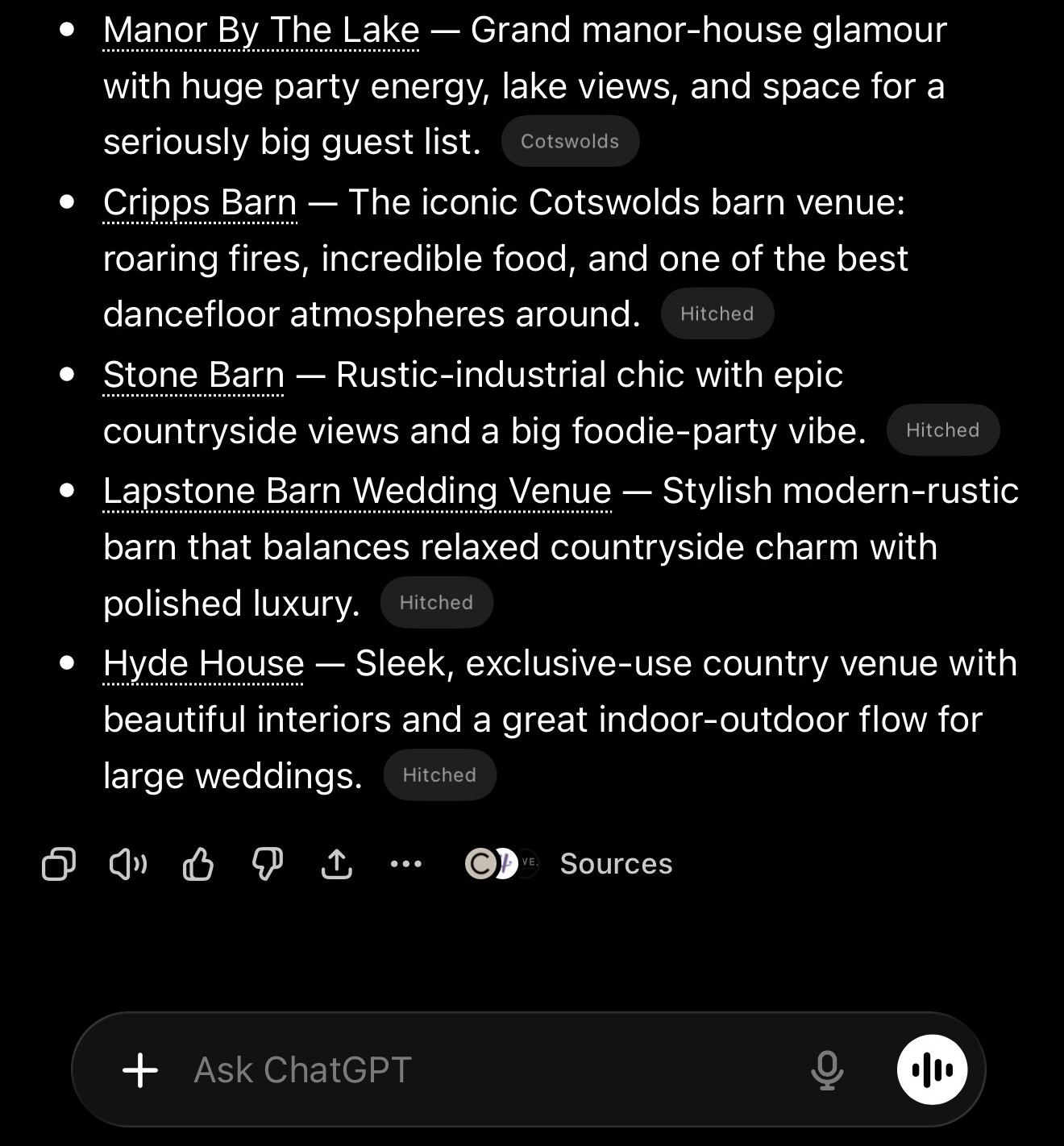
- Manor By The Lake
- Cripps Barn
- Stone Barn
- Lapstone Barn
- Hyde House
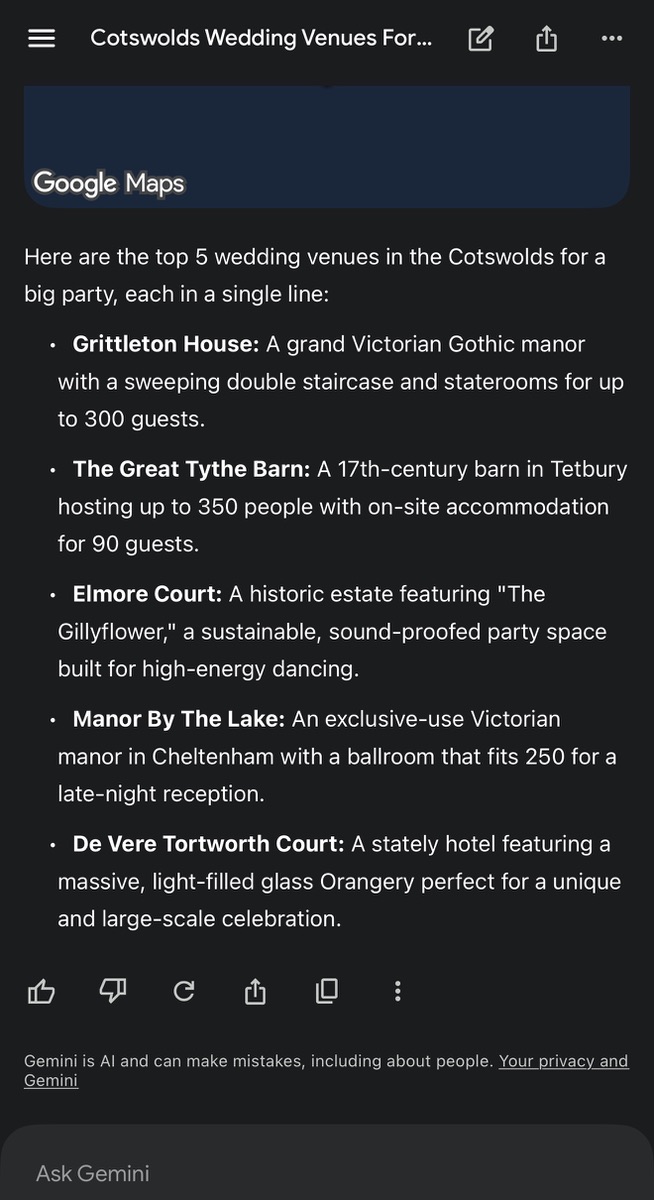
- Grittleton House
- The Great Tythe Barn
- Elmore Court
- Manor By The Lake
- De Vere Tortworth Court
across four answers
3 of 4 answers
2 of 4 answers
all four answers
Same query. Three Google surfaces: Gemini, Search AI Overview, and AI Mode. Three different shortlists. Only Manor By The Lake appeared in all three. The Multi-Index Problem isn’t just between engines. It’s within them. Read the full breakdown →
The fix is one discipline, not six.
Six AI surfaces sounds like six strategies. It isn’t. It’s one foundation, applied once, that pays off in six places.
- One canonical site. Proper schema, named experts, current evidence, extractable facts. The job your website has always had, done well enough that an AI can read it.
- Claimed on every Webmaster Tool. Google Search Console, Bing Webmaster Tools, and a clean Brave-search check. Most businesses we audit have one of the three. Almost none have all three.
- Consistent third-party presence. Different aggregators feed different indexes. The trade press, review sites, and registers each engine trusts: covered once, you’re covered across surfaces.
- A standing audit across the surfaces. Replaces “how do we rank on Google?” with the only question that now matters: are we present where the buyer is asking?
You’re not behind. Almost no business we audit has fixed this. The directors who start the discipline this quarter aren’t catching up. They’re claiming the position before competitors notice the game has changed.
Your buyer is asking the same question. Which engines name you?
Read the full briefing on the Multi-Index Problem →If your buyer is asking AI about your category, you should know what AI says back.
Two routes from here. Read the full thinking behind the demo, or get a Friction & Toil audit of how the four AI assistants describe your business right now.
Hyde House appears in three answers (Perplexity, Claude, and ChatGPT) and is missing from the fourth: Gemini. That single absence is the Multi-Index Problem in one venue. Hyde House surfaces across the indexes feeding three of these assistants — Perplexity’s own crawler, the Brave-fed index behind Claude, and the Bing-plus-OpenAI blend behind ChatGPT. It is invisible on Google’s first-party stack, which is the only one Gemini reads.
Fourteen distinct venues. Four shortlists. The buyer’s answer depends on which AI they happened to open. Claude and ChatGPT cluster around a set of Cotswolds barns. Perplexity reaches for castles and country manors. Gemini lands somewhere different again. The engines aren’t random. They’re reading different webs, and clustering by what they read. Four engines, four answers, one buyer.